

The Ultimate Hedge Against Global Crisis
In 2006, the 311-bedroom Grand Emperor Hotel opened in Macau, China. Designed to echo the glamor of European royal palaces, the opulent lobby featured an antique gold carriage and a floor paved with gold.
The lavish opening was attended by action star Jackie Chan, a part-owner in the project, and the hotel soon became an emblem of Macau’s blinged-out casino culture which drew in well-heeled high rollers.
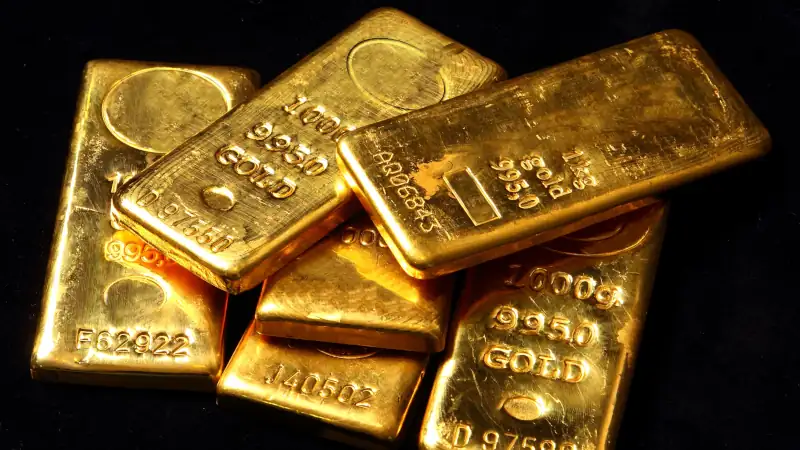
At the time, the value of this yellow brick road embedded with 79 kilograms of gold bars was around $1.2 million. As 2026 dawned and gold surged to an all-time high, the hotel’s owners, Hong Kong-based Emperor Entertainment Hotel Ltd, decided it was time to cash in. They sold the stash for $12.8 million.
A former Portuguese colony, Macau was returned to China in 1999 and its 13 square mile territory is the only place in the country where gambling is legal.
Once dubbed the Las Vegas of Asia, in recent times Macau has come under increasing pressure from powers in Beijing to diversify its economy. The Grand Emperor Hotel closed its casino last year and plans to redevelop it as a leisure and entertainment space. Thanks to the sale of their gold, they now have quite the budget.
Financial pundits say to hold at least 10% of your investment portfolio in precious metals—gold, silver, platinum, and palladium. They’re thinking about wealth management.
I say, you need two parts of your wealth held in precious metals. One amount as a general hedge against inflation and the volatility of other asset classes and another amount as a hedge against a financial system meltdown or other global crisis where fiat currency isn’t available or isn’t acceptable.
Unlike paper money, gold and silver have millennia of history being accepted in trade. It’s what the world will revert to in times of crisis.
The truth is paper money isn’t even accepted as easily as it used to be… at least in Europe where cash transactions are legally limited in size.
In France, there is a limit of €1,000 placed upon taxpayers resident in France for cash payments to traders. For non-resident taxpayers the limit is €15,000.
Heck, you can’t even cash a check in a bank in France. You have to deposit it into your bank account and take cash out of the ATM.
In Spain payments of €1,000 or more to or from traders are prohibited for tax residents. Break the law and the penalty is 25% of the sum.
In Greece—with the exception of a car purchase—the limit is set at just €500. Anything above that and you have to pay by bank transfer, bankcard, or check.
These days most people don’t carry enough cash to buy a cup of coffee opting instead for credit and debit cards, Apple Pay, Google Pay or some other online app.
I used to get stuck paying for things in small kiosks in Europe when traveling with my grown kids. They don’t carry cash. Fortunately, many of these vendors have portable credit card processing machines that connect to data on their phones.
But what happens when the vendor’s hot spot fails? You can’t buy anything unless you have cash.
Now, think bigger.
What’s going to happen when (not if) bank computers and ATMs shut down due to electrical outages, cyber-attacks, or because governments turn them off? The masses will likely be caught short unable to pay for goods and services.
Cash is still accepted in most places despite European countries trying hard to eliminate it altogether, but even people who have cash in their pocket for random purchases don’t hold a backup stash of cash at home.
Before you start building up your precious metals holdings, I recommend starting with holding some cash… not in a bank account, but in your wallet.
Keep at least enough cash on hand to get you through a couple of weeks of groceries. Once you have some cash on hand, the next emergency bucket you should fill is one with gold and silver in an accessible location.
While financial pundits suggest you to hold at least 10% of your wealth in precious metals, that gold and silver is typically held in a vault in somewhere. That could be under the airport in Zurich where billions worth of gold is stored in an area effectively as secure as Fort Knox. Or it could be elsewhere like Singapore, Hong Kong, or even the U.S.
One company I know of has a $250,000 minimum requirement for holding gold with them. If you’re wealthy enough to hold that much gold, you might not have thought of the practicalities of accessing your gold in a time of global crisis.
What good is that gold held in a vault if you can’t get to it?
If you can get to it, what good is that gold to purchase daily necessities if it’s in the form of a one-kilo bar? You’re not going to buy $65,000 worth of groceries at one time and shaving off pieces is impractical.
Go Offshore Today
Sign up to our free twice a week dispatch Offshore Living Letter
and immediately receive our FREE research report
on how to live tax-free today, while earning up to $215,200!
Bulk gold definitely belongs in everyone’s portfolio as a store of wealth, but it’s not going to be much use in a global crisis where paper money isn’t accepted and you need to feed your family.
One ounce gold coins are portable, but still have the problem of use for smaller transactions. Maybe you’ll buy $2,000 worth of groceries if you have to in one trip to the store, but unlikely. You need transactional sized bits of gold and silver in a worst-case scenario.
One option many Americans have embraced is pre-1965 coins. These ‘junk’ silver coins have about three quarters of an ounce of silver for every dollar of face value (90% silver content in the coins themselves). You can buy these in bulk online from coin dealers.
These coins can work well, but silver is bulky for its value. Transporting large dollar amounts of it gets cumbersome and expensive.
Gold options include coins smaller than a one-ounce Maple Leaf or American Eagle—a-half, a-quarters, and even one-tenth of an ounce. Still, the value of even small gold coins can be more than you’d spend in a single trip to the grocery store, but more transactional than a one-ounce coin or a one kilo bar.
The premium paid over the metal value for silver coins and smaller gold coins is at least 25%. A mint in Switzerland came up with an end of days product to make it easier to conduct business when fiat currencies are no longer acceptable.
Valcambi CombiBars are designed for flexibility, allowing you to break off smaller, precise pieces of silver, gold, or platinum—my wife refers to it as “chocolate bar gold.” The 20‑gram gold version is made up of 20 one‑gram sections, making it convenient for fractional transactions.
While spot gold right now is around $130 per gram, small bars like these carry a premium, meaning the cost of each gram will be higher than the raw market price.
Valcambi and other reputable mints produce “mini” bars in a variety of weights, including half-a-gram, one gram, two-and-a-half grams, five grams, 10 grams, and 20 grams, as well as 1/10 oz and 1/4 oz bars.
These smaller bars come individually packaged with an assay certificate, ensuring authenticity and making them ideal for gifting, collecting, or fractional investment.
CombiBars, in particular, are useful for transactions where precise, small quantities of precious metals are needed.
Next week at my LIOS Money Event, my precious metals experts will share their insights into your best options for owning and storing gold, silver, platinum, palladium, and more.
If wealth protection is on your agenda—and it should be—you do not want to miss this.
Stay diversified,
